
1.建立模板文件夹
在app文件夹下面,建立一个templates的文件夹,
2.index.html:
<html>
    <head>
        <title>{{ title }} - Microblog</title>
    </head>
    <body>
        <h1>Hello, {{ user.username }}!</h1>
    </body>
</html>
3.修改outes.py
from flask import render_template
from app import app

@app.route('/')
@app.route('/index')
def index():
    user = {'username': 'Miguel'}
    return render_template('index.html', title='Home', user=user)
4.浏览效果
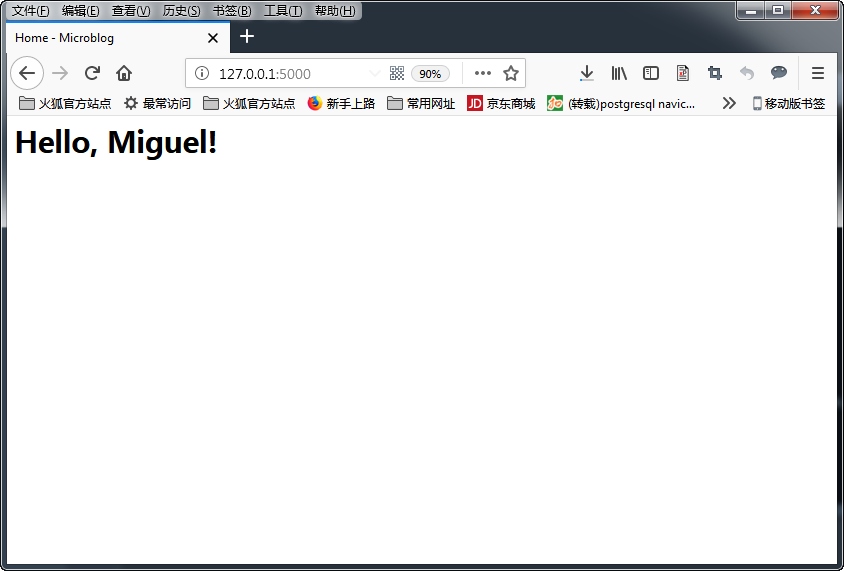
这时再从浏览器中查看,就会变成这样了。
二.模板继承
1.base.html
在app/templates/文件夹下面建立一个base.html文件。
这里有一个知识点:if条件判断
<html>
    <head>
      {% if title %}
      <title>{{ title }} - Microblog</title>
      {% else %}
      <title>Welcome to Microblog</title>
      {% endif %}
    </head>
    <body>
        <div>Microblog: <a href="/index">Home</a></div>
        <hr>
        {% block content %}{% endblock %}
    </body>
</html>
2.index.html
修改index.html的代码。
这里有一个知识点:for循环。
{% extends "base.html" %}

{% block content %}
    <h1>Hi, {{ user.username }}!</h1>
    {% for post in posts %}
    <div><p>{{ post.author.username }} says: <b>{{ post.body }}</b></p></div>
    {% endfor %}
{% endblock %}
3.修改routes.py
from flask import render_template
from app import app

@app.route('/')
@app.route('/index')
def index():
    user = {'username': 'Miguel'}
    posts = [
        {
            'author': {'username': 'John'},
            'body': 'Beautiful day in Portland!'
        },
        {
            'author': {'username': 'Susan'},
            'body': 'The Avengers movie was so cool!'
        }
    ]
    return render_template('index.html', title='Home', user=user, posts=posts)
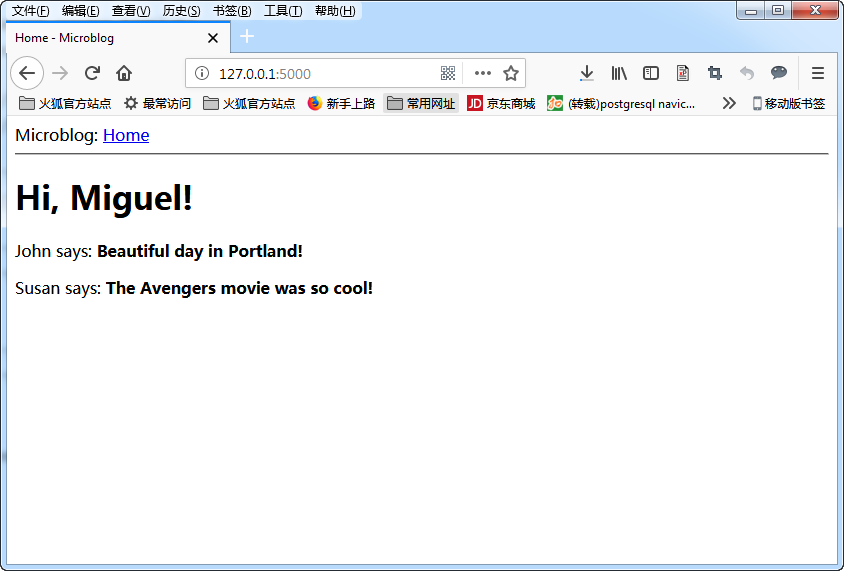
4.查看效果