

一、原理
1.先把一篇文章,按逗号分隔成一个一个句子。(有点缺陷,比如如果句子中是冒号,分号,它认为是一句话。)
2.然后计算每个短语的字数,取字数最多的两句话。
3.拿上面两句话去百度搜索,并分别计算每句话在百度第一页搜索结果中的次数,然后加总。出现次数最少的文章,我们认为它的原创性要高一些。
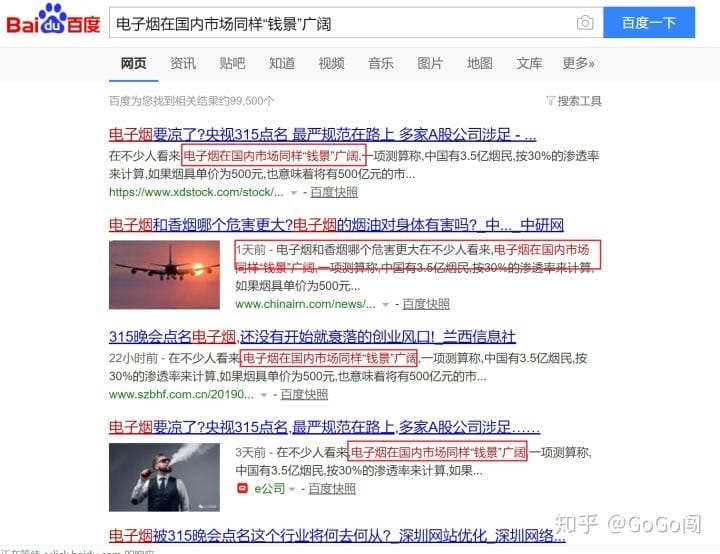
因为若一个文章被其他网站大量转载,那么随便提取该文章中一个短语,都能在百度搜索出完全重复的内容:
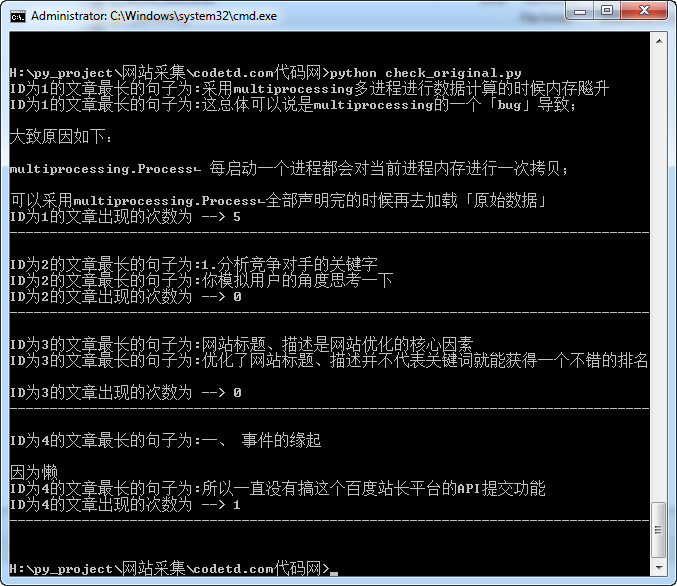
二、成果展示
三、代码
#coding:utf-8

import requests,re,time,sys,json,datetime
import multiprocessing
import MySQLdb as mdb


def search(req,html):
    text = re.search(req,html)
    if text:
        data = text.group(1)
    else:
        data = 'no'
    return data

def date(timeStamp):
    timeArray = time.localtime(timeStamp)
    otherStyleTime = time.strftime("%Y-%m-%d %H:%M:%S", timeArray)
    return otherStyleTime

def getHTml(url):

    host = search('^([^/]*?)/',re.sub(r'(https|http)://','',url))  #后半部分是去除网址前缀,前半部分是得到www.baidu.com。


    headers = {
        "Accept":"text/html,application/xhtml+xml,application/xml;q=0.9,image/webp,*/*;q=0.8",
        "Accept-Encoding":"gzip, deflate, sdch",
        "Accept-Language":"zh-CN,zh;q=0.8,en;q=0.6",
        "Cache-Control":"no-cache",
        "Connection":"keep-alive",
        #"Cookie":"",
        "Host":host,
        "Pragma":"no-cache",
        "Upgrade-Insecure-Requests":"1",
        "User-Agent":"Mozilla/5.0 (Macintosh; Intel Mac OS X 10_11_4) AppleWebKit/537.36 (KHTML, like Gecko) Chrome/52.0.2743.116 Safari/537.36",
    }

  # 代理服务器
    proxyHost = "proxy.abuyun.com"
    proxyPort = "9010"

    # 代理隧道验证信息
    proxyUser = "XXXX"
    proxyPass = "XXXX"

    proxyMeta = "http://%(user)s:%(pass)s@%(host)s:%(port)s" % {
      "host" : proxyHost,
      "port" : proxyPort,
      "user" : proxyUser,
      "pass" : proxyPass,
    }

    proxies = {
        "http"  : proxyMeta,
        "https" : proxyMeta,
    }

    html = requests.get(url,headers=headers,timeout=10)
    # html = requests.get(url,headers=headers,timeout=30,proxies=proxies)
    code = html.encoding
    return html.content


def getContent(word):
    """
    比对进度搜索结果,返回word在搜索结果中出现的次数
    """
    pcurl = 'http://www.baidu.com/s?q=&tn=json&ct=2097152&si=&ie=utf-8&cl=3&wd=%s&rn=10' % word
    # print '@@@@@@@@@@@@@@@@@@@@@@@@@@@@@@@@@@@@ start crawl %s @@@@@@@@@@@@@@@@@@@@@@@@@@@@@@@@@@@@' % pcurl
    html = getHTml(pcurl)

    a = 0
    html_dict = json.loads(html)   #百度结果是json格式,所以可以loads
    for tag in html_dict['feed']['entry']:
        if tag.__contains__('title'):
            title = tag['title']
            url = tag['url']
            rank = tag['pn']  #排名。
            time = date(tag['time'])
            abs = tag['abs']  #摘要
            # print(abs)

            if word in abs:
                a += 1
    return a


con = mdb.connect('127.0.0.1','root','','python_test',charset='utf8')
cur = con.cursor()
with con:
    cur.execute("select aid,content from article_content limit 5")
    numrows = int(cur.rowcount)
    for i in range(numrows):
        row = cur.fetchone()

        aid = row[0]
        content = row[1]
        content_format = re.sub('<[^>]*?>','',content)

        a = 0
        for z in [ x for x in content_format.split(',') if len(x)>10 ][:2]:   #将文章按','分为一个个句子,取最长的两个句子。
            print("ID为{}的文章最长的句子为:{}".format(aid,z))
            time.sleep(5)
            a += getContent(z)
        print ("ID为{}的文章出现的次数为 --> {}".format(aid,a))
        print("-"*80)


# words = open(wordfile).readlines()
# pool = multiprocessing.Pool(processes=10)
# for word in words:
    # word = word.strip()
    # pool.apply_async(getContent, (word,client ))
# pool.close()
# pool.join()